!DOCTYPE html PUBLIC "-//W3C//DTD XHTML 1.0 Strict//EN" "http://www.w3.org/TR/xhtml1/DTD/xhtml1-strict.dtd">
Streamline Training & Documentation
Streamline Training & Documentation
Tuesday, April 27, 2010
Thomas H. Connell III, 1942 -2010
One of the most charming obituaries I've ever read is that for the Metropolitan Opera's chief stage manager, Thomas Connell, published in today's edition of the New York Times.
Here is the closing portion of the Times obituary: ... no stage manager can take the weight of a singing horse. In the same “Falstaff,” Ms. Pierson recalled, the soprano made an entrance on horseback. One night, as she began her aria, the horse was moved to bray along in bold duet.
“What do you do when the horse starts to sing at the same time as the singer starts to sing?” Ms. Pierson asked.
There was only one thing for it. Mr. Connell fired the horse.
I haven't seen Walt Disney's Davy Crockett TV shows for many years, so below I quote an appreciative review that someone with the screen name gobirds2 posted at Amazon in April 2002, a few months after Disney issued the five original shows on DVD. Davy Crockett is one of Walt Disney's most endeared and remembered live action characters. He was presented to American audiences by Walt Disney on the Disneyland TV Show in 1954. He was personified by Fess Parker beloved ever after by his sincere portrayal. This colorful and entertaining character was first seen in three episodes from the TV show ("Davy Crockett, Indian Fighter," "Davy Crockett Goes to Congress" and "Davy Crockett at the Alamo"). Parker, with his coonskin cap and homespun drawl and witticism created a nationwide phenomenon in 1954. Who can forget "The Ballad Of Davy Crockett" composed by George Bruns and Tom Blackburn. Buddy Ebsen played his sidekick George Russel, whose adventures take them from Tennessee to Washington, D.C. to the Alamo in the first three episodes. The series' third episode focusing on the defense of the Alamo, though well remembered, is somewhat labored until we see the final image of Davy Crockett passing into legend and glory. This straightforward and beautifully photographed series expounds the virtues of honesty, integrity and bravery. The country could not get enough of Davy so he and George Russel returned in 1955 for two more episodes ("Davy Crockett's Keel Boat Race" and "Davy Crockett and the River Pirates"). For Davy Crockett's second season on television the show was retitled "The Legends of Davy Crockett." The necessary title change came about because we had seen Davy come to his end defending the Alamo and Walt Disney wanted to continue bringing us his adventures. "Davy Crockett's Keel Boat Race" is about a riverboat race between Davy and another American folklore hero Mike Fink. "Davy Crockett and the River Pirates" is about Davy's attempt to stop an Indian uprising with Mike Fink's assistance. In some ways these two episodes are the best. Davy Crockett appears less the frontier fighter and more the good-natured peacemaker in these episodes. The riverboat race with Mike Fink is very entertaining and a high point in Disney's American frontier live action adventures. I don't even think John Ford could have filmed this sequence any better. Kenneth Tobey, who worked with John Ford, is excellent in a great comedic part (Fess Parker made note of Tobey's performance in a supplemental interview on the DVD). Walt Disney gave this actor a chance to demonstrate his great versatility and range as an actor. Also, Mike Fink's boats may look a little familiar since they are the basis for the riverboat ride at the Magic Kingdom in Walt Disney World. That's a nice nostalgic tie in! Bert Glennon's cinematography is beautifully picturesque as ever and is matched seamlessly with some very effective glass shot special effects by Peter Ellenshaw. This is one of the best DVDs to come from the Disney vaults. Walt Disney introduces each of the five episodes exactly as they were originally presented on the Disneyland TV Show. The Supplemental Features on this DVD are above and beyond what I had expected. Most of Disney's DVD extras seem to concentrate on the technical aspects of the feature presentation. This DVD focused more on the phenomenon that the legend of Davy Crockett created and the [effect] it had and continues to have on those who were brought up in those times. There are two exceptional Features: "A Conversation with Fess Parker" and "The Davy Crockett Craze." "The Gallery" of photos and memorabilia is also excellent. "A Conversation with Fess Parker" really hit home with me. Fess Parker appeared to be the genuine article that he was. In a world of eroded morals filled with dirt and filth everywhere you turn it was more than comforting to hear Fess Parker's fond recollections of his portrayal and the ideals that Walt immortalized through the tales of this legendary character. If your eyes feel a little watery its because [you're] remembering a time not so long ago when our heroes were real heroes. This is one of the best and should help keep the legend alive for those that lived it, those that loved it and for those that will someday be touched by it.
Creating nests of cultural life required more than money. Only about 2 to 3 percent of nobles could afford to build and maintain the two hundred or so staff required, say, for a large house, church, planned garden, and other amenities; and to hire foreign conductors, musicians, ballet masters, and set designers. The middling and poorer Maecenases of art had little alternative but to deploy their serfs on the front lines of creativity and performance. But even the grandees drew on their serf population for rank-and-file performers. The belief, just starting to erode in other parts of Europe, that artists were hardly better than artisans or servants remained intact in Russia; playing a violin or dancing on stage seemed only a step away from craft skills or household and farm chores. Owners of large estates could draw from armies of field hands, drivers, under-stewards, and various technical workers. For more modest landlords, household serfs made up the recruitment pool: cooks, scullery maids, butlers, and valets. Serf artists of all kinds could be differentiated and segregated from field serfs and domestics in treatment, apparel, and even housing. Just as often, they shared the status of stable boys, millers, blacksmiths, and domestics, even alternating in these roles on a regular basis. An ex-serf recalled in his memoirs how owners inhibited initiative and pride of work by shuttling serfs from farm to house, turning cooks to coachmen, lackeys to clerks or shepherds. [p. 30]
The New York Times obituary for Richard Stites, longtime professor at Georgetown University, is here.
As detailed in the obituary at the MSPCA website, Gus Thornton first arrived at the MSPCA's Angell Memorial Animal Hospital in Boston in 1957 as an intern. He became Chief of Staff in 1966, a position he held until 1989, when he was named President of the MSPCA. He retired in 2002. He was a man respected, admired, and loved who will be much missed.
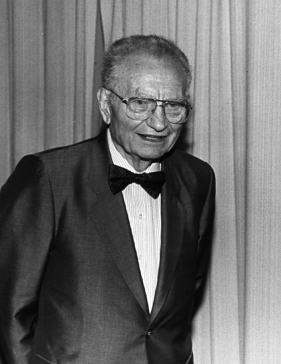
... let me give you a bit of boring autobiography. I came to the University of Chicago on the morning of January 2, 1932. I wasn't yet a graduate of high school for another few months. And that was about the low point of the Herbert Hoover/Andrew Mellon phase after October of 1929. That's quite a number of years to have inaction. And I couldn't reconcile what I was being taught at the University of Chicago — the lectures and the books I was being assigned — with what I knew to be true out in the streets.
My family was well off but not rich. I spent the four years I was an undergraduate working on the beach. And it wasn't because I was lazy; it was because my freshman class would go to a hundred different employers and wouldn't get a nibble. That was a disequilibrium system. I realized that the ordinary old-fashioned Euclidean geometry didn't apply.
And I applauded when the major members of the Chicago faculty — maybe even a few years before Keynes's general theory [published in 1936] — came out with a petition to have deficit-financed spending without taxation in order to create a new increment of spending power. And I was for that. And Franklin Roosevelt, who was not a trained economist, and who experimented and made a lot of mistakes, in his first days, by good luck or good advice got the system moving. It was in a sense an easier problem because the pathology was so terrible.
He would go to Warm Springs, Georgia. And that county — a pretty sizeable one, this is the old south — there were maybe three to ten people with enough income to file an income tax return. So, when along came the WPA, the PWA, and a little later the Reconstruction Finance Corporation, you could be very sure that those monies spit out by government — not from airplanes in the air, sending newly printed greenbacks, but essentially the equivalent of that — would be spent.
I don't know if you know the name, the professor E. Cary Brown wrote kind of the definitive article in the American Economic Review on what had been accomplished by deficit spending that was sustained. And his numerical findings were that there were no miracles — it was about what you'd expect — but it worked. And so I developed a guarded admiration for Keynes. And I say guarded because I don't think he understood his system as well as some of the people around him did.
Anyway, this swept the field for a number of decades. And then, when the 1970s came, with very heavy supply side shocks — the quadrupling of OPEC oil prices overnight, a rash of bad harvests, and the terrible price/wage control system contrived by Arthur Burns and Nixon 17 months before the election in order to ensure that they won. All these things added up. And Keynesianism, if it was thought to promise perpetual prosperity, became disparaged.
[Excerpted, with a few copy-editing changes, from a June 16, 2009 interview with Paul Samuelson conducted by Conor Clarke and published at theatlantic.com]
As a follow-on to last month's Adam Smith Retrospective, I'd like to call attention to a ten-minute overview of Adam's Smith's work that Chris Berry, a professor of political theory at the University of Glasgow and an expert on Smith, has put together.
Professor Berry covers both The Theory of Moral Sentiments and An Inquiry into the Nature and Causes of the Wealth of Nations, the two books from which the Retrospective quotations were taken.
Of Adams' first book Prof. Berry says:
The Moral Sentiments is a leading example of a particular approach to moral philosophy — one that regards it not as sets of rationally or Divine ordained prescriptions but as the interaction of human feelings, emotions or sentiments in the real settings of human life. In many ways it is a book of social and moral psychology. What we can call economic behaviour is necessarily situated in a moral context. But more than that the key theme of the book is an opposition to the view that all morality or virtue is reducible to self-interest. Indeed his opening sentence declares that everyday human experience proves that false, he writes: "How selfish soever a man may be supposed, there are evidently some principles in his nature which interest him in the fortune of others, and render their happiness necessary to him, though he derive nothing from it except the pleasure of seeing it".
About the later book, Prof. Berry notes:
When Smith came to write the Wealth of Nations he made it clear that the ‘wealth’ lay in the well-being of the people. This covered not only their material prosperity but also their moral welfare. Accordingly he thought to be in poverty is to be in a miserable condition and commerce is to be praised for improving human life.
The great achievement of the Wealth of Nations was to discern the principles of order in the seeming chaos of commercial or market behaviour — it wasn’t random, it could be reduced to some simple principles. It was for this reason that Smith was described as the Newton of political economy. ...
He identifies basic principles such as the human propensity to ‘truck, barter and exchange’ that he argues underlies the division of labour but says that this depends on a market and that requires some institutional structures like those that uphold justice such as government and how that in turn mutually relies on principles of public finance.
It cannot be overemphasized that Adam Smith had a sophisticated and humane view of how people's economic interactions play out and of how those interactions should be regulated.
On the other hand, it is certainly a mistake to think that one should always simply sit and wait for grim circumstances to pass. John Maynard Keynes view on this point is famous . . . But this long run is a misleading guide to current affairs. In the long run we are all dead. Economists set themselves too easy, too uselss a task if in tempestuous seasons they can only tell us that when the storm is long past the ocean is flat again.
The basic question Williamson has examined in his research is what determines when the market is the best mechanism for handling business transactions, and when the firm is best.
Answering this question required Williamson to investigate what sorts of transaction costs make use of the firm structure — a hierarchical structure — more economical, relative to depending on market dealings.
As the Royal Swedish Academy of Sciences explains in its summary for the public,
... Williamson expects hierarchical organizations to emerge when transactions are complex or non-standard [making it hard to write complete and enforceable contracts], and when parties are mutually dependent. Perhaps the most typical case of mutual dependence is that parties have assets, either physical assets or knowledge, which are only valuable inside a relationship.
For example:
The value of a coal mine in case the owner cannot agree on the terms of trade with a nearby power plant depends on the distance to the second-nearest buyer of coal, which is usually another power plant. Likewise, the value of a coal-burning power plant in case it cannot trade with the nearby coal mine depends on the distance to the second nearest mine. The larger the distances, the greater is the mutual dependence, and — according to the theory — the more likely the mine and the plant are vertically integrated. This is precisely what is observed. When there are other nearby mines and power plants, firms are typically incorporated separately and trade under relatively short and simple contracts. As the distance to alternative trading partners increases, contract duration and complexity also increase. According to one of the studies, a coal-burning power plant that is located next to a coal mine is about six times more likely to be fully integrated than is any other coal-burning power plant.
For further coverage of Williamson's work, touching upon the evidence for the validity of his theory, its policy implications, and how it has been expanded and deepened by other researchers, you can read the Academy of Sciences' Scientific Background (pdf – about six pages each on Williamson and Ostrom).
Elinor Ostrom's Research on Management of Common Resources
You can get an overview of Elinor Ostrom's work on "self-organizing and self-governing forms of collective action" in an interview (pdf) she gave Paul Aligica in 2003.
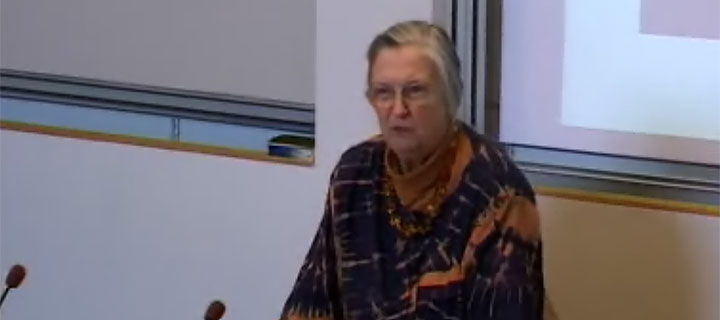
Elinor Ostrom talking in Stockholm about getting "Beyond the Tragedy of the Commons" (2009) (Stockholm Resilience Centre)
In the interview, Ostrom explains the gist of her thinking:
Academics, aid donors, international nongovernmental organizations, central governments, and local citizens need to learn and relearn that no government can develop the full array of knowledge, institutions and social capital needed to govern development efficiently and sustainably. The sheer variety of cultural and biological adaptations to diverse ecological conditions is so great that I am willing to make the following assertion: Any single, comprehensive set of formal laws intended to govern a large expanse of territory containing diverse ecological niches is bound to fail in many of the areas where it is applied.
Improving the abilities of those directly engaged in the particulars of their local conditions to organize themselves in deeply nested enterprises is potentially a more successful strategy for solving resource problems than attempting to implement idealized, theoretically optimal institutional arrangements. There is plenty that national government officials can do to help a self-governing society. They can provide efficient, fair, and honest court systems, effective property right systems and large-scale infrastructure projects — such as national highways — that cannot be provided locally.
Ostrom emphasizes the importance of viewing self-organized groups as complex adaptive systems and of recognizing the value of polycentric governance.
Complex adaptive systems are composed of a large number of active elements whose rich patterns of interaction produce emergent properties that are not easy to predict by analyzing the separate parts of a system. One can see them as consisting of rules and interacting agents that adapt by changing the rules dynamically on the basis of experience. ... [S]ocial scientists have yet to develop many of the concepts needed to understand the adaptability of systems. ...
Many of the capabilities of complex adaptive systems are retained in a polycentric public enterprise system. By "polycentric" I mean a system where citizens are able to organize not just one but multiple governing authorities, as well as private arrangements, at different scales. Each unit may exercise considerable independence to make and enforce rules within a circumscribed scope of authority for a specified geographical area. ... Self-organized resource governance systems, in such a system, may be special districts, private associations, or parts of a local government.
...
Serious empirical research has now shown that polycentric systems tend to generate higher levels of output at similar or lower costs than monocentric systems governing similar ecological, urban, and social systems.
Another, more recent overview of Ostrom's work is provided in the video below, which records the 8½-minute talk she gave earlier this year at the Stockholm Resilience Centre.
(Background information on Ostrom's Stockholm talk is here.)
The video below shows Sosa singing "Cuando Tenga la Tierra" at the 1983 Central American Peace Concert, held in the square in front of the cathedral in Managua, Nicaragua.
The Washington Post posted a detailed obituary today (though it carries tomorrow's date).
But the greatest of all knockabout comedy teams ever to grace the Apollo stage was Cook and Brown (Charles “Cookie” Cook and Ernest “Brownie” Brown), who first played the Apollo in 1935. Charles Cook was born in Chicago (February 11, 1917) and raised in Detroit ... Around 1929, at the age of twelve, Cook performed with “Garbage and His Two Cans” and toured with Sarah Venable’s “Mammy and Her Picks” with his childhood friend and future dance partner, Ernest “Brownie” Brown, who was born in Chicago (April 25, 1916). In 1930, the two formed Cook & Brown. Their act combined acrobatic stunts and grass-roots humor with eccentric dancing. The short-tempered, six-foot tall Cook, known for his Russian floor dancing, played foil to the diminutive five-foot tall Brownie who, when knocked down, slid the full length of the stage and bounced up in a reverse split, thumbing his nose and ready for more abuse. In 1931, they played the Lafayette Theatre in New York, and stayed, quickly becoming highly popular comedic performers, despite the Great Depression. In 1934 they played the Cotton Club and skyrocketed to popularity, playing the Palace, Palladium and Apollo with Duke Ellington, Count Basie, Lena Horne and Bill Robinson. On Broadway in Kiss Me Kate (1948), choreographed by modern dancer Hanya Holm, they stopped the show with their routines in “Too Darn Hot” and “Brush Up Your Shakespeare.” [American Tap Dance Foundation]
The video below shows Ernest Brown and Charles Cook performing in "Chatter," a 1943 soundie.
"Dinosaurs Run in Circles," which came out in May, was musician and producer Jim Dickinson's last release. (Live From Memphis)
"There's no agenda or anything to hide behind with this record. The material all comes from a deep place. With my other albums, they've kinda been done in character; as James Luther Dickinson. But this record is just Jim Dickinson, it's just me." (from an interview published in the Memphis Commercial Appeal on May 29, 2009)
You can read the obituary for Jim Dicikinson published in today's Commercial Appealhere.
"Down grade into the valley" Illustration from John Muir's article, "The Treasures of Yosemite" (1890) (Sierra Club)
One shining morning, at the head of the Pacheco Pass, a landscape was displayed that after all my wanderings still appears as the most divinely beautiful and sublime I have ever beheld. There at my feet lay the great central plain of California, level as a lake thirty or forty miles wide, four hundred long, one rich furred bed of golden Compositae. And along the eastern shore of this lake of gold rose the mighty Sierra, miles in height, in massive, tranquil grandeur, so gloriously colored and so radiant that it seemed not clothed with light, but wholly composed of it, like the wall of some celestial city. Along the top, and extending a good way down, was a rich pearl-gray belt of snow; then a belt of blue and dark purple, marking the extension of the forests; and stretching along the base of the range a broad belt of rose-purple, where lay the miners' gold and the open foothill gardens--all the colors smoothly blending, making a wall of light clear as crystal and ineffably fine, yet firm as adamant. Then it seemed to me the Sierra should be called, not the Nevada or Snowy Range, but the Range of Light. And after ten years in the midst of it, rejoicing and wondering, seeing the glorious floods of light that fill it,--the sunbursts of morning among the mountain-peaks, the broad noonday radiance on the crystal rocks, the flush of the alpenglow, and the thousand dashing waterfalls with their marvelous abundance of irised spray,--it still seems to me a range of light. But no terrestrial beauty may endure forever. The glory of wildness has already departed from the great central plain. Its bloom is shed, and so in part is the bloom of the mountains. In Yosemite, even under the protection of the Government, all that is perishable is vanishing apace.
[. . .]
The most famous and accessible of these cañon valleys, and also the one that presents their most striking and sublime features on the grandest scale, is the Yosemite, situated on the upper waters of the Merced at an elevation of 4000 feet above the level of the sea. It is about seven miles long, half a mile to a mile wide, and nearly a mile deep, and is carved in the solid granite flank of the range. The walls of the valley are made up of rocks, mountains in size, partly separated from each other by side cañons and gorges; and they are so sheer in front, and so compactly and harmoniously built together on a level floor, that the place, comprehensively seen, looks like some immense hall or temple lighted from above. But no temple made with hands can compare with Yosemite. Every rock in its walls seems to glow with life. Some lean back in majestic repose; others, absolutely sheer or nearly so for thousands of feet, advance beyond their companions in thoughtful attitudes giving welcome to storms and calms alike, seemingly conscious, yet heedless of everything going on about them. Awful in stern, immovable majesty, how softly these mountain rocks are adorned and how fine and reassuring the company they keep--their feet set in groves and gay emerald meadows, their brows in the thin blue sky, a thousand flowers leaning confidingly against their adamantine bosses, bathed in floods of booming water, floods of light, while snow, clouds, winds, avalanches, shine and sing and wreathe about them as the years go by! Birds, bees, butterflies, and myriads of nameless wings stir the air into music and give glad animation. Down through the midst flows the crystal Merced--river of mercy--peacefully gliding, reflecting lilies and trees and the onlooking rocks, things frail and fleeting and types of endurance meeting here and blending in countless forms, as if into this one mountain mansion Nature had gathered her choicest treasures, whether great or small to draw her lovers into close and confiding communion with her.
[. . .]
Along the curves and zigzags of the road, all the way down to the bottom, the valley is in sight with ever-changing views, and the eye ranges far up over the green grovy floor between the mighty walls, bits of the river gleaming here and there, while as we draw nearer we begin to hear the song of the waters. Gazing at random, perhaps the first object to gain concentrated attention will be the Bridal Veil, a beautiful waterfall on our right. Its brow, where it first leaps free from the rock, is about nine hundred feet above us; and as it sways and sings in the wind, with gauzy, sun-sifted spray half falling, half floating, it seems infinitely gentle and fine; but the hymn it sings tells the solemn power that is hidden beneath the soft clothing it wears.
[. . .]
Owing to the westerly trend of the valley and its vast depth there is a great difference between the climates of the north and south sides--greater than between many countries far apart; for the south wall is in shadow during the winter months, while the north is bathed in sunshine every clear day. Thus there is mild spring weather on one side of the valley while winter rules the other. Far up the north-side cliffs many a nook may be found closely embraced by sun-beaten rock-bosses in which flowers bloom every month of the year. Even butterflies may be seen in these high winter gardens except when storms are falling and a few days after they have ceased. Near the head of the lower Yosemite Fall in January I found the ant lions lying in wait in their warm sand-cups, rock ferns being unrolled, club mosses covered with fresh growing points, the flowers of the laurel nearly open, and the honeysuckle rosetted with bright young leaves; every plant seemed to be thinking about summer and to be stirred with good vital sunshine. Even on the shadow side of the valley the frost is never very sharp. The lowest temperature I ever observed during four winters was +7°. The first twenty-four days of January had an average temperature at 9 A. M. of 32°, minimum 22°; at 3 P. M. the average was 40° 30', the minimum 32°.
In a dry, hot, monotonous forested plateau, seemingly boundless, you come suddenly and without warning upon the abrupt edge of a gigantic sunken landscape of the wildest, most multitudinous features, and those features, sharp and angular, are made out of flat beds of limestone and sandstone forming a spiry, jagged, gloriously colored mountain range countersunk in a level gray plain. It is a hard job to sketch it even in scrawniest outline; and, try as I may, not in the least sparing myself, I cannot tell the hundredth part of the wonders of its features--the side canyons, gorges, alcoves, cloisters, and amphitheaters of vast sweep and depth, carved in its magnificent walls; the throng of great architectural rocks it contains resembling castles, cathedrals, temples, and palaces, towered and spired and painted, some of them nearly a mile high, yet beneath one's feet. All this, however, is less difficult than to give any idea of the impression of wild, primeval beauty and power one receives in merely gazing from its brink. The view down the gulf of color and over the rim of its wonderful wall, more than any other view I know, leads us to think of our earth as a star with stars swimming in light, every radiant spire pointing the way to the heavens.
[. . .]
It is very hard to give anything like an adequate conception of its size; much more of its color, its vast wall-sculpture, the wealth of ornate architectural buildings that fill it, or, most of all, the tremendous impression it makes. According to Major Powell, it is about two hundred and seventeen miles long, from five to fifteen miles wide from rim to rim, and from about five thousand to six thousand feet deep. So tremendous a chasm would be one of the world's greatest wonders even if, like ordinary canyons cut in sedimentary rocks, it were empty and its walls were simple. But instead of being plain, the walls are so deeply and elaborately carved into all sorts of recesses--alcoves, cirques, amphitheaters, and side canyons--that, were you to trace the rim closely around on both sides, your journey would be nearly a thousand miles long. Into all these recesses the level, continuous beds of rock in ledges and benches, with their various colors, run like broad ribbons, marvelously beautiful and effective even at a distance of ten or twelve miles. And the vast space these glorious walls enclose, instead of being empty, is crowded with gigantic architectural rock forms gorgeously colored and adorned with towers and spires like works of art.
[. . .]
No other range of mountainous rock-work of anything like the same extent have I seen that is so strangely, boldly, lavishly colored. The famous Yellowstone Canyon below the falls comes to mind; but, wonderful as it is, and well deserved as is its fame, compared with this it is only a bright rainbow ribbon at the roots of the pines. Each of the series of level, continuous beds of carboniferous rocks of the canyon has, as we have seen, its own characteristic color. The summit limestone beds are pale yellow; next below these are the beautiful rose-colored cross-bedded sandstones; next there are a thousand feet of brilliant red sandstones; and below these the red wall limestones, over two thousand feet thick, rich massy red, the greatest and most influential of the series, and forming the main color-fountain. Between these are many neutral-tinted beds. The prevailing colors are wonderfully deep and clear, changing and blending with varying intensity from hour to hour, day to day, season to season; throbbing, wavering, glowing, responding to every passing cloud or storm, a world of color in itself, now burning in separate rainbow bars streaked and blotched with shade, now glowing in one smooth, all-pervading ethereal radiance like the alpenglow, uniting the rocky world with the heavens.
[. . .]
To the mountaineer the depth of the canyon, from five thousand to six thousand feet, will not seem so very wonderful, for he has often explored others that are about as deep. But the most experienced will be awestruck by the vast extent of huge rock monuments of pointed masonry built up in regular courses towering above, beneath, and round about him. By the Bright Angel Trail the last fifteen hundred feet of the descent to the river has to be made afoot down the gorge of Indian Garden Creek. Most of the visitors do not like this part, and are content to stop at the end of the horse trail and look down on the dull-brown flood from the edge of the Indian Garden Plateau. By the new Hance Trail, excepting a few daringly steep spots, you can ride all the way to the river, where there is a good spacious camp-ground in a mesquite grove. This trail, built by brave Hance, begins on the highest part of the rim, eight thousand feet above the sea, a thousand feet higher than the head of Bright Angel Trail, and the descent is a little over six thousand feet, through a wonderful variety of climate and life. Often late in the fall, when frosty winds are blowing and snow is flying at one end of the trail, tender plants are blooming in balmy summer weather at the other. The trip down and up can be made afoot easily in a day. In this way one is free to observe the scenery and vegetation, instead of merely clinging to his animal and watching its steps. But all who have time should go prepared to camp awhile on the riverbank, to rest and learn something about the plants and animals and the mighty flood roaring past. In cool, shady amphitheaters at the head of the trail there are groves of white silver fir and Douglas spruce, with ferns and saxifrages that recall snowy mountains; below these, yellow pine, nut pine, juniper, hop-hornbeam, ash, maple, holly-leaved berberis, cowania, spiraea, dwarf oak, and other small shrubs and trees. In dry gulches and on taluses and sun-beaten crags are sparsely scattered yuccas, cactuses, agave, etc. Where springs gush from the rocks there are willow thickets, grassy flats, and bright, flowery gardens, and in the hottest recesses the delicate abronia, mesquite, woody compositae, and arborescent cactuses.
[. . .]
Here at Hance's river camp or a few miles above it brave Powell and his brave men passed their first night in the canyon on the adventurous voyage of discovery thirty-three [34] years ago. They faced a thousand dangers, open or hidden, now in their boats gladly sliding down swift, smooth reaches, now rolled over and over in back-combing surges of rough, roaring cataracts, sucked under in eddies, swimming like beavers, tossed and beaten like castaway drift--stout-hearted, undaunted, doing their work through it all. After a month of this they floated smoothly out of the dark, gloomy, roaring abyss into light and safety two hundred miles below. As the flood rushes past us, heavy-laden with desert mud, we naturally think of its sources, its countless silvery branches outspread on thousands of snowy mountains along the crest of the continent, and the life of them, the beauty of them, their history and romance. Its topmost springs are far north and east in Wyoming and Colorado, on the snowy Wind River, Front, Park, and Sawatch Ranges, dividing the two ocean waters, and the Elk, Wahsatch, Uinta, and innumerable spurs streaked with streams, made famous by early explorers and hunters. It is a river of rivers--the Du Chesne, San Rafael, Yampa, Dolores, Gunnison, Cochetopa, Uncompahgre, Eagle, and Roaring Rivers, the Green and the Grand, and scores of others with branches innumerable, as mad and glad a band as ever sang on mountains, descending in glory of foam and spray from snow-banks and glaciers through their rocky moraine-dammed, beaver-dammed channels. Then, all emerging from dark balsam and pine woods and coming together, they meander through wide, sunny park valleys, and at length enter the great plateau and flow in deep canyons, the beginning of the system culminating in this grand canyon of canyons.
[. . .]
Every building is seen to be a remnant of once continuous beds of sediments,--sand and slime on the floor of an ancient sea, and filled with the remains of animals,--and every particle of the sandstones and limestones of these wonderful structures to be derived from other landscapes, weathered and rolled and ground in the storms and streams of other ages. And when we examine the escarpments, hills, buttes, and other monumental masses of the plateau on either side of the canyon, we discover that an amount of material has been carried off in the general denudation of the region compared with which even that carried away in the making of the Grand Canyon is as nothing. Thus each wonder in sight becomes a window through which other wonders come to view. In no other part of this continent are the wonders of geology, the records of the world's auld lang syne, more widely opened, or displayed in higher piles. The whole canyon is a mine of fossils, in which five thousand feet of horizontal strata are exposed in regular succession over more than a thousand square miles of wall-space, and on the adjacent plateau region there is another series of beds twice as thick, forming a grand geological library--a collection of stone books covering thousands of miles of shelving, tier on tier, conveniently arranged for the student. And with what wonderful scriptures are their pages filled--myriad forms of successive floras and faunas, lavishly illustrated with colored drawings, carrying us back into the midst of the life of a past infinitely remote. And as we go on and on, studying this old, old life in the light of the life beating warmly about us, we enrich and lengthen our own.
Source: Excerpt from "The Grand Canyon of the Colorado," Chapter 24 of John Muir's 1918 book, Steep Trails. You can read the full text of the book here.
I followed the main Oregon and California stage-road from Redding to Sisson's, and besides trees, squirrels, and beautiful mountain-streams, I came upon some interesting men, rugged, weather-beaten fellows, who, in hunting and mining, had been brought face to face with many a Shasta storm. Most of them were a kind of almanac, stored with curious facts and dates and ancient weather-notes, extending through a score of stormy mountain years. Whether the coming winter was to be mild or severe was the question of questions, and the diligence and fervor with which it was discussed was truly admirable. A picturesque series of prognostications were offered, based by many different methods upon the complexion of the sky, the fall of leaves, the flight of wild geese, etc., each of which seemed wholly satisfactory only to its author.
A pedestrian upon these mountain-roads is sure to excite curiosity, and many were the interrogations put concerning my little ramble. When told that I came from town for an airing and a walk, and that icy Shasta was my mark, I was invariably informed that I had come the wrong time of year. The snow was too deep, the wind too violent, and the danger of being lost in blinding drifts too great. And when I hinted that clean snow was beautiful, and that storms were not so bad as they were called, they closed the argument by directing attention to their superior experiences, declaring most emphatically that the ascent of "Shasta Butte" through the snow was impossible. Nevertheless, I watched the robins eating wild cherries, and rejoiced in brooding over the miles of lavish snow that I was to meet. Sisson gave me bread and venison, and before noon of the 2d of November I was in the frosty azure of the summit.
[. . .]
ASCENDING SHASTA IN WINTER
The ordinary and proper way to ascend Shasta is to ride from Sisson's to the upper edge of the timber line, — a distance of some eight or ten miles — the first day, and camp, and rising early push on to the summit, and return the second day. But the deep snow prevented the horses from reaching the camping-ground, and after stumbling and wallowing in the drifts and lava blocks we were glad to camp as best we could, some eight or ten hundred feet lower. A pitch-pine fire speedily changed the climate and shed a blaze of light on the wild lava slope and the straggling storm-bent pines around us. Melted snow answered for coffee-water and we had plenty of delicious venison to roast.
Toward midnight I rolled myself in my blankets and slept until half-past one, when I arose and ate more venison, tied two days' provisions to my belt, and set out for the summit. After getting above the highest flexilis pines it was fine practice pushing up the magnificent snow-slopes alone in the silence of the night. Half the sky was clouded; in the other half the stars sparkled icily in the thin, frosty air, while everywhere the glorious snow fell away from the summit of the cone in flowing folds more extensive and unbroken than any I had ever yet beheld. When the day dawned the clouds were crawling slowly and massing themselves, but gave no intimation of immediate danger. The snow was dry as meal, and drifted freely, rolling over and over in angular fragments like sand, or rising in the air like dust. The frost was intense, and the wind full of crystal dust, making breathing at times rather difficult. In pushing upwards I frequently sank to my arm-pits between buried lava-blocks, but most of the way only to my knees. When tired of walking I still wallowed forward on all fours. The steepness of the slope — thirty-five degrees in many places--made any species of progress very fatiguing, but the sublime beauty of the snowy expanse and of the landscapes that began to rise around, and the intense purity of the icy azure overhead thrilled every fibre with wild enjoyment and rendered absolute exhaustion impossible. Yet I watched the sky with great caution, for it was easy to see that a storm was approaching. Mount Shasta rises 10,000 feet above the general level in blank exposure to the deep gulf-streams of air, and I have never been in a labyrinth of peaks and canyons where the dangers of a storm seemed so formidable as here. I was, therefore, in constant readiness to retreat into the timber. However, by half past 10 o'clock I reached the utmost summit.
[. . .]
AMONG THE STORM CLOUDS
Next morning, breaking suddenly out of profound sleep, my eyes opened upon one of the most sublime scenes I ever beheld. A boundless wilderness of storm-clouds of different age and ripeness were congregated over all the landscape for thousands of square miles, colored gray, and purple, and pearl and glowing white, among which I seemed to be floating, while the cone of Shasta above and the sky was tranquil and full of the sun. It seemed not so much an ocean as a land of clouds, undulating hill and dale, smooth purple plains, and silvery mountains of cumuli, range over range, nobly diversified with peaks and domes, with cool shadows between, and with here and there a wide trunk canyon, smooth and rounded as if eroded by glaciers. I gazed enchanted, but cold gray masses drifting hither and thither like rack on a wind-swept plain began to shut out the light, and it was evident that they would soon be marshalled for storm. I gathered as much wood as possible, and snugged it shelteringly around my storm-nest. My blankets were arranged, and the topmost fastened down with stakes, and my precious bread-sack tucked in at my head, I was ready when the first flakes fell. All kinds of clouds began to fuse into one, the wind swept past in hissing floods, and the storm closed down on all things, producing a wild exhilaration.
My fire blazed bravely, I had a week's wood, a sack full of bread, and a nest that the wildest wind could not demolish, and I had, moreover, plenty of material for the making of snow-shoes if the depth of the snow should render them necessary.
The storm lasted about a week, and I had plenty to do listening to its tones and watching the gestures of the flexilis pine, and in catching snow-crystals and examining them under a lensand observing the methods of their deposition as summer fountains.
[. . .]
Source: Excerpt from "Shasta in Winter," published December 21,1874 in the Daily Evening Bulletin (San Francisco). You can read the full text here.
By night of the third day we reached the Soda Springs on the right bank of the Nisqually, which goes roaring by, gray with mud, gravel, and boulders from the caves of the glaciers of Rainier, now close at hand. The distance from the Soda Springs to the Camp of the Clouds is about ten miles. The first part of the way lies up the Nisqually Canyon, the bottom of which is flat in some places and the walls very high and precipitous, like those of the Yosemite Valley. The upper part of the canyon is still occupied by one of the Nisqually glaciers, from which this branch of the river draws its source, issuing from a cave in the gray, rock-strewn snout. About a mile below the glacier we had to ford the river, which caused some anxiety, for the current is very rapid and carried forward large boulders as well as lighter material, while its savage roar is bewildering.
At this point we left the canyon, climbing out of it by a steep zigzag up the old lateral moraine of the glacier, which was deposited when the present glacier flowed past at this height, and is about eight hundred feet high. It is now covered with a superb growth of Picea amabilis [30]; so also is the corresponding portion of the right lateral. From the top of the moraine, still ascending, we passed for a mile or two through a forest of mixed growth, mainly silver fir, Patton spruce, and mountain pine, and then came to the charming park region, at an elevation of about five thousand feet above sea level. Here the vast continuous woods at length begin to give way under the dominion of climate, though still at this height retaining their beauty and giving no sign of stress of storm, sweeping upward in belts of varying width, composed mainly of one species of fir, sharp and spiry in form, leaving smooth, spacious parks, with here and there separate groups of trees standing out in the midst of the openings like islands in a lake. Every one of these parks, great and small, is a garden filled knee-deep with fresh, lovely flowers of every hue, the most luxuriant and the most extravagantly beautiful of all the alpine gardens I ever beheld in all my mountain-top wanderings.
[. . .]
At noon next day we left camp and began our long climb. We were in light marching order, save one who pluckily determined to carry his camera to the summit. At night, after a long easy climb over wide and smooth fields of ice, we reached a narrow ridge, at an elevation of about ten thousand feet above the sea, on the divide between the glaciers of the Nisqually and the Cowlitz. Here we lay as best we could, waiting for another day, without fire of course, as we were now many miles beyond the timberline and without much to cover us. After eating a little hardtack, each of us leveled a spot to lie on among lava-blocks and cinders. The night was cold, and the wind coming down upon us in stormy surges drove gritty ashes and fragments of pumice about our ears while chilling to the bone. Very short and shallow was our sleep that night; but day dawned at last, early rising was easy, and there was nothing about breakfast to cause any delay. About four o'clock we were off, and climbing began in earnest. We followed up the ridge on which we had spent the night, now along its crest, now on either side, or on the ice leaning against it, until we came to where it becomes massive and precipitous. Then we were compelled to crawl along a seam or narrow shelf, on its face, which we traced to its termination in the base of the great ice cap. From this point all the climbing was over ice, which was here desperately steep but fortunately was at the same time carved into innumerable spikes and pillars which afforded good footholds, and we crawled cautiously on, warm with ambition and exercise.
At length, after gaining the upper extreme of our guiding ridge, we found a good place to rest and prepare ourselves to scale the dangerous upper curves of the dome. The surface almost everywhere was bare, hard, snowless ice, extremely slippery; and, though smooth in general, it was interrupted by a network of yawning crevasses, outspread like lines of defense against any attempt to win the summit. Here every one of the party took off his shoes and drove stout steel caulks about half an inch long into them, having brought tools along for the purpose, and not having made use of them until now so that the points might not get dulled on the rocks ere the smooth, dangerous ice was reached. Besides being well shod each carried an alpenstock, and for special difficulties we had a hundred feet of rope and an axe.
Thus prepared, we stepped forth afresh, slowly groping our way through tangled lines of crevasses, crossing on snow bridges here and there after cautiously testing them, jumping at narrow places, or crawling around the ends of the largest, bracing well at every point with our alpenstocks and setting our spiked shoes squarely down on the dangerous slopes. It was nerve-trying work, most of it, but we made good speed nevertheless, and by noon all stood together on the utmost summit, save one who, his strength failing for a time, came up later.
We remained on the summit nearly two hours, looking about us at the vast maplike views, comprehending hundreds of miles of the Cascade Range, with their black interminable forests and white volcanic cones in glorious array reaching far into Oregon; the Sound region also, and the great plains of eastern Washington, hazy and vague in the distance. Clouds began to gather. Soon of all the land only the summits of the mountains, St. Helen's, Adams, and Hood, were left in sight, forming islands in the sky. We found two well-formed and well-preserved craters on the summit, lying close together like two plates on a table with their rims touching. The highest point of the mountain is located between the craters, where their edges come in contact. Sulphurous fumes and steam issue from several vents, giving out a sickening smell that can be detected at a considerable distance. The unwasted condition of these craters, and, indeed, to a great extent, of the entire mountain, would tend to show that Rainier is still a comparatively young mountain. With the exception of the projecting lips of the craters and the top of a subordinate summit a short distance to the northward, the mountains is solidly capped with ice all around; and it is this ice cap which forms the grand central fountain whence all the twenty glaciers of Rainier flow, radiating in every direction.
[. . .]
Source: Excerpt from "An Ascent of Mount Rainer," Chapter 20 of John Muir's 1918 book, Steep Trails. You can read the full text of the book here.
At a distance of less than 3000 feet below the summit of Mount Ritter you may find tributaries of the San Joaquin and Owen's rivers, bursting forth from the ice and snow of the glaciers that load its flanks; while a little to the north of here are found the highest affluents of the Tuolumne and Merced. Thus, the fountains of four of the principal rivers of California are within a radius of four or five miles.
Lakes are seen gleaming in all sorts of places, — round, or oval, or square, like very mirrors; others narrow and sinuous, drawn close around the peaks like silver zones, the highest reflecting only rocks, snow, and the sky. But neither these nor the glaciers, nor the bits of brown meadow and moorland that occur here and there, are large enough to make any marked impression upon the mighty wilderness of mountains. The eye, rejoicing in its freedom, roves about the vast expanse, yet returns again and again to the fountain peaks. Perhaps some one of the multitude excites special attention, some gigantic castle with turret and battlement, or some Gothic cathedral more abundantly spired than Milan's. But, generally, when looking for the first time from an all-embracing standpoint like this, the inexperienced observer is oppressed by the incomprehensible grandeur, variety, and abundance of the mountains rising shoulder to shoulder beyond the reach of vision; and it is only after they have been studied one by one, long and lovingly, that their far-reaching harmonies become manifest. Then, penetrate the wilderness where you may, the main telling features, to which all the surrounding topography is subordinate, are quickly perceived, and the most complicated clusters of peaks stand revealed harmoniously correlated and fashioned like works of art — eloquent monuments of the ancient ice-rivers that brought them into relief from the general mass of the range. The cañons, too, some of them a mile deep, mazing wildly through the mighty host of mountains, however lawless and ungovernable at first sight they appear, are at length recognized as the necessary effects of causes which followed each other in harmonious sequence — Nature's poems carved on tables of stone — the simplest and most emphatic of her glacial compositions.
[. . .]
But in the midst of these fine lessons and landscapes, I had to remember that the sun was wheeling far to the west, while a new way down the mountain had to be discovered to some point on the timber line where I could have a fire; for I had not even burdened myself with a coat. I first scanned the western spurs, hoping some way might appear through which I might reach the northern glacier, and cross its snout; or pass around the lake into which it flows, and thus strike my morning track. This route was soon sufficiently unfolded to show that, if practicable at all, it would require so much time that reaching camp that night would be out of the question. I therefore scrambled back eastward, descending the southern slopes obliquely at the same time. Here the crags seemed less formidable, and the head of a glacier that flows northeast came in sight, which I determined to follow as far as possible, hoping thus to make my way to the foot of the peak on the east side, and thence across the intervening cañons and ridges to camp.
The inclination of the glacier is quite moderate at the head, and, as the sun had softened the névé, I made safe and rapid progress, running and sliding, and keeping up a sharp outlook for crevasses. About half a mile from the head, there is an ice-cascade, where the glacier pours over a sharp declivity and is shattered into massive blocks separated by deep, blue fissures. To thread my way through the slippery mazes of this crevassed portion seemed impossible, and I endeavored to avoid it by climbing off to the shoulder of the mountain. But the slopes rapidly steepened and at length fell away in sheer precipices, compelling a return to the ice. Fortunately, the day had been warm enough to loosen the ice-crystals so as to admit of hollows being dug in the rotten portions of the blocks, thus enabling me to pick my way with far less difficulty than I had anticipated. Continuing down over the snout, and along the left lateral moraine, was only a confident saunter, showing that the ascent of the mountain by way of this glacier is easy, provided one is armed with an ax to cut steps here and there.
The lower end of the glacier was beautifully waved and barred by the outcropping edges of the bedded ice-layers which represent the annual snowfalls, and to some extent the irregularities of structure caused by the weathering of the walls of crevasses, and by separate snowfalls which have been followed by rain, hail, thawing and freezing, etc. Small rills were gliding and swirling over the melting surface with a smooth, oily appearance, in channels of pure ice — their quick, compliant movements contrasting most impressively with the rigid, invisible flow of the glacier itself, on whose back they all were riding.
Night drew near before I reached the eastern base of the mountain, and my camp lay many a rugged mile to the north; but ultimate success was assured. It was now only a matter of endurance and ordinary mountain-craft. The sunset was, if possible, yet more beautiful than that of the day before. The Mono landscape seemed to be fairly saturated with warm, purple light. The peaks marshaled along the summit were in shadow, but through every notch and pass streamed vivid sun-fire, soothing and irradiating their rough, black angles, while companies of small, luminous clouds hovered above them like very angels of light.
Darkness came on, but I found my way by the trends of the cañons and the peaks projected against the sky. All excitement died with the light, and then I was weary. But the joyful sound of the waterfall across the lake was heard at last, and soon the stars were seen reflected in the lake itself. Taking my bearings from these, I discovered the little pine thicket in which my nest was, and then I had a rest such as only a tired mountaineer may enjoy. After lying loose and lost for awhile, I made a sunrise fire, went down to the lake, dashed water on my head, and dipped a cupful for tea. The revival brought about by bread and tea was as complete as the exhaustion from excessive enjoyment and toil. Then I crept beneath the pine-tassels to bed. The wind was frosty and the fire burned low, but my sleep was none the less sound, and the evening constellations had swept far to the west before I awoke.
[. . .]
Source: Excerpt from "A Near View of the High Sierra," Chapter 4 of John Muir's 1894 book, The Mountains of California. You can read the full text of the book here.
The Morro Castle, one of the first sights John Muir saw when he sailed into Havana Harbor in 1868 (Wikimedia Commons)
The daily programme for nearly all the month that I spent here was about as follows: After breakfast a sailor rowed me ashore on the north side of the harbor. A few minutes’ walk took me past the Morro Castle and out of sight of the town on a broad cactus common, about as solitary and untrodden as the tangles of Florida. Here I zigzagged and gathered prizes among unnumbered plants and shells along the shore, stopping to press the plant specimens and to rest in the shade of vine-heaps and bushes until sundown. The happy hours stole away until I had to return to the schooner. Either I was seen by the sailors who usually came for me, or I hired a boat to take me back. Arrived, I reached up my press and a big handful of flowers, and with a little help climbed up the side of my floating home.
Refreshed with supper and rest, I recounted my adventures in the vine tangles, cactus thickets, sunflower swamps and along the shore among the breakers. My flower specimens, also, and pocketfuls of shells and corals had to be reviewed. Next followed a cool, dreamy hour on deck amid the lights of the town and the various vessels coming and departing.
Many strange sounds were heard: the vociferous, unsmotherable bells, the heavy thundering of cannon from the Castle, and the shouts of the sentinels in measured time. Combined they made the most incessant sharp-angled mass of noise that I ever was doomed to hear. Nine or ten o’clock found me in a small bunk with the harbor wavelets tinkling outside close to my ear. The hours of sleep were filled with dreams of heavy heat, of fruitless efforts for the disentanglement of vines, or of running from curling breakers back to the Morro, etc. Thus my days and nights went on.
[. . .]
Havana abounds in public squares, which in all my random strolls throughout the big town I found to be well watered, well cared for, well planted, and full of exceedingly showy and interesting plants, rare even amid the exhaustless luxuriance of Cuba. These squares also contained fine marble statuary and were furnished with seats in the shadiest places. Many of the walks were paved instead of graveled.
The streets of Havana are crooked, labyrinthic, and exceedingly narrow. The sidewalks are only about a foot wide. A traveler experiences delightful relief when, heated and wearied by rains through the breadth of the dingy yellow town, dodging a way through crowds of men and mules and lumbering carts and carriages, he at length finds shelter in the spacious, dust-less, cool, flowery squares; still more when, emerging from all the din and darkness of these lanelike streets, he suddenly finds himself out in the middle of the harbor, inhaling full-drawn breaths of the sea breezes.
[. . .]
Havana has a fine botanical garden. I spent pleasant hours in its magnificent flowery arbors and around its shady fountains. There is a palm avenue which is considered wonderfully stately and beautiful, fifty palms in two straight lines, each rigidly perpendicular. The smooth round shafts, slightly thicker in the middle, appear to be productions of the lathe, rather than vegetable stems. The fifty arched crowns, inimitably balanced, blaze in the sunshine like heaps of stars that have fallen from the skies. The stems were about sixty or seventy feet in height, the crowns about fifteen feet in diameter.
Along a stream-bank were tall, waving bamboos, leafy as willows, and infinitely graceful in wind gestures. There was one species of palm, with immense bipinnate leaves and leaflets fringed, jagged, and one-sided, like those of Adiantum. Hundreds of the most gorgeous-flowered plants, some of them large trees, belonging to the Leguminosae. Compared with what I have before seen in artificial flower-gardens, this is past comparison the grandest. It is a perfect metropolis of the brightest and most exuberant of garden plants, watered by handsome fountains, while graveled and finely bordered walks slant and curve in all directions, and in all kinds of fanciful playground styles, more like the fairy gardens of the Arabian Nights than any ordinary man-made pleasure-ground.
[. . .]
Source: Excerpt from "A Sojourn in Cuba," Chapter 7 of John Muir's 1916 book, A Thousand-Mile Walk to the Gulf. You can read the full text of the book here.